The Mathematical Idea That Changed Our Understanding of Space
A manifold can look flat everywhere nearby while hiding curves, holes and dimensions visible only globally.
A manifold is a space that looks like ordinary Euclidean space in every small neighbourhood, even when its complete shape is curved, looped or higher-dimensional. Beginning with Earth’s locally flat surface, this concept documentary…
▶ Watch Documentary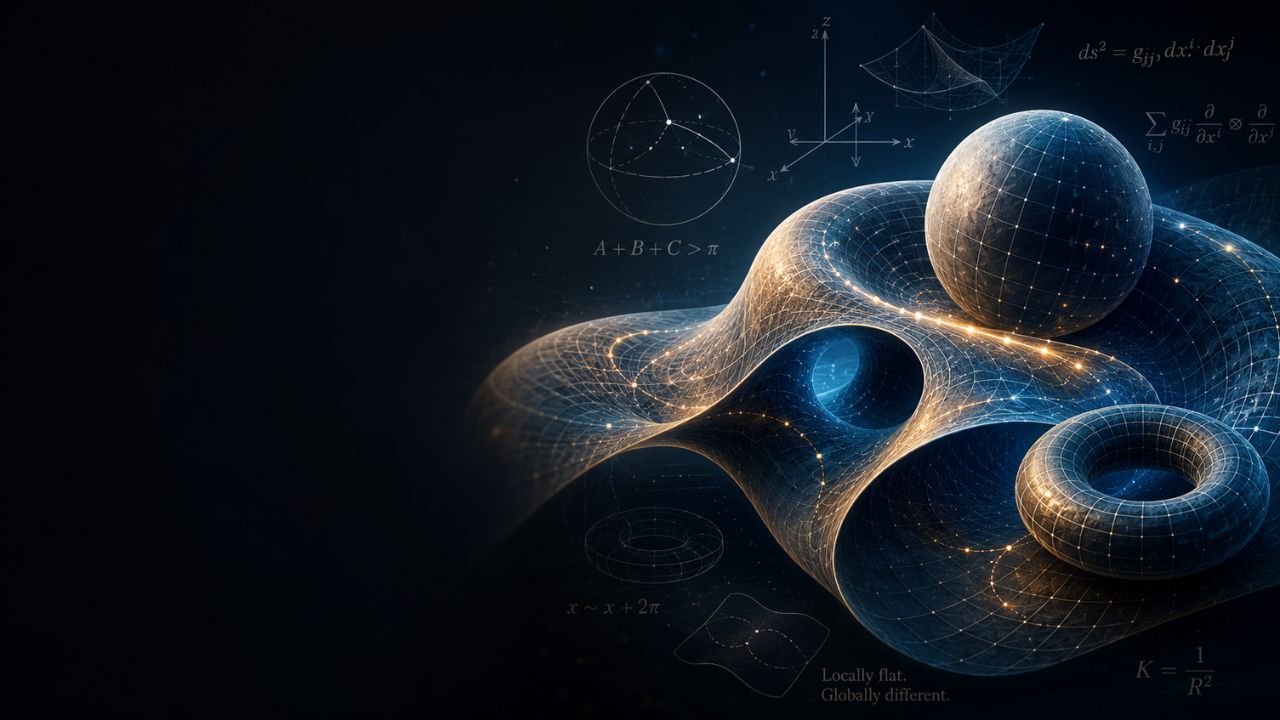
Synopsis
A manifold is a space that looks like ordinary Euclidean space in every small neighbourhood, even when its complete shape is curved, looped or higher-dimensional. Beginning with Earth’s locally flat surface, this concept documentary follows Riemann’s 1854 rethinking of geometry and explains circles, spheres, cylinders and tori. It then reveals how configuration spaces describe double pendulums and robotic arms, before showing why Einstein used a four-dimensional manifold to express spacetime and gravity.
Why This Matters
Manifolds teach a powerful lesson: local simplicity can conceal extraordinary global structure. The idea lets mathematicians study spaces that cannot be drawn, while engineers use configuration manifolds to plan robot motion and physicists use a curved spacetime manifold to describe gravity. This video builds the concept visually through ants, oranges, spheres, cylinders, tori and pendulums, showing how one nineteenth-century change of viewpoint became a common language across geometry, dynamics and modern science.
Life & Journey
Gauss Intrinsic Curvature
Riemann Geometry Lecture
Poincaré Topology Published
Spacetime Geometry Formulated
de Rham Theorem
Whitney Embedding Theorem
Nash Embedding Theorem
Exotic Spheres Discovered
Four-Manifolds Classified
Geometrization Proof Completed
More from MigOroEdu
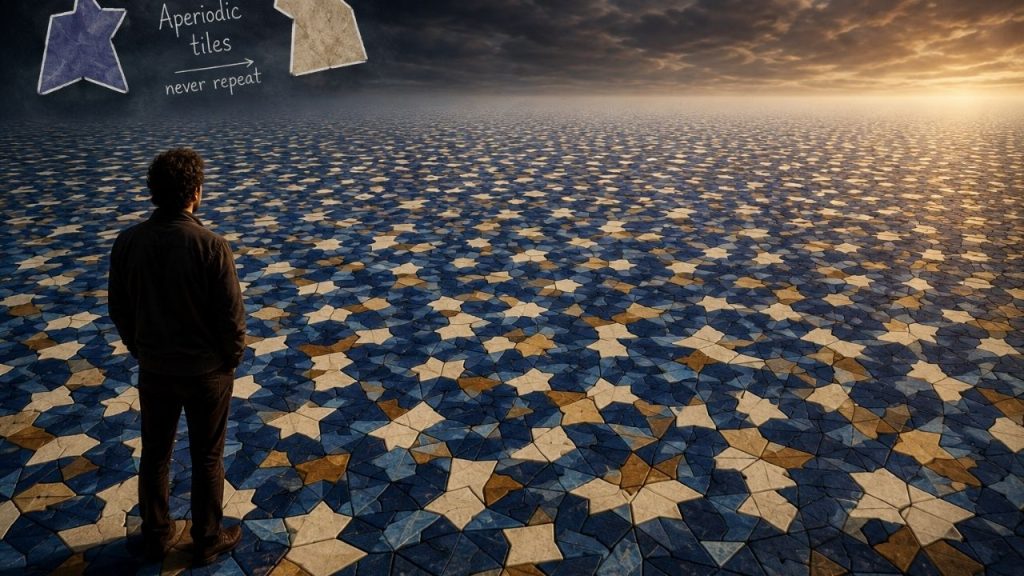
The Shape That Can Fill Space — Without Ever Repeating It
MigOroEdu · 15 min
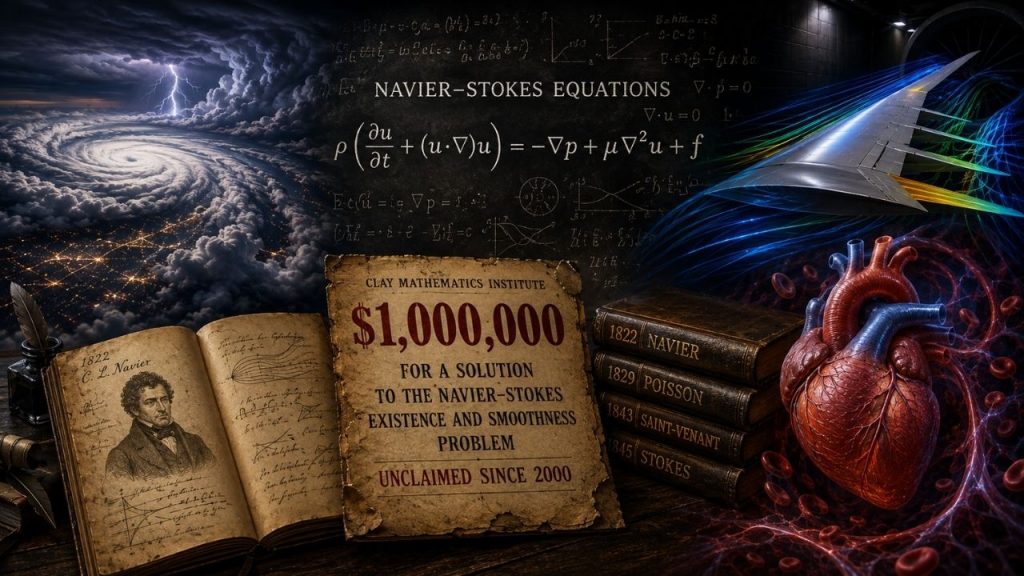
The 200-Year-Old Equation We Still Can’t Prove Is Safe
MigOroEdu · 15 min
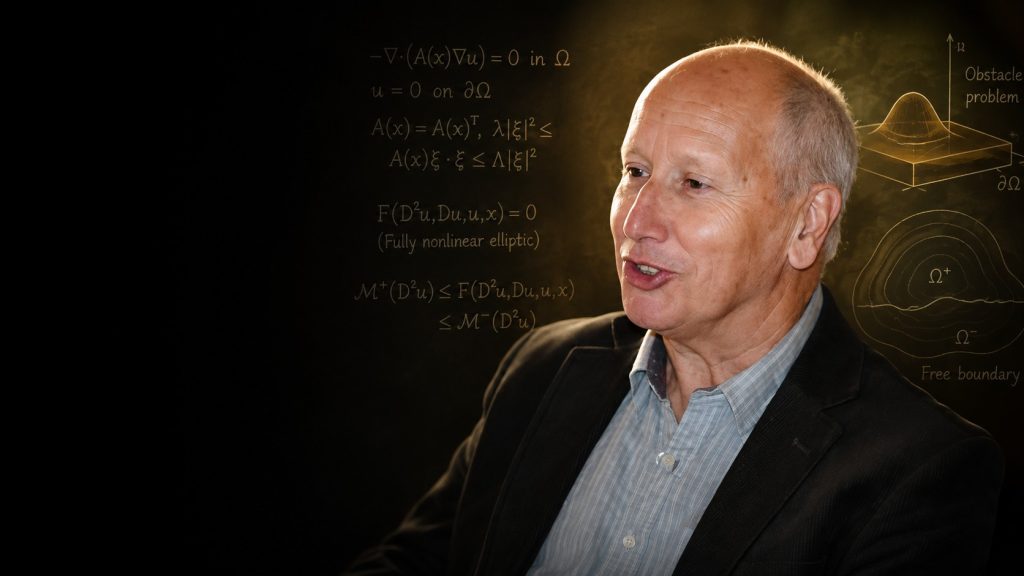
Luis Caffarelli
MigOroEdu · 15 min
Paul Cohen
MigOroEdu · 15 min