The Chemist Who Turned Magnetic Signals into Molecular Images
How Richard Ernst transformed NMR and made modern molecular structure analysis possible.
Richard R. Ernst transformed nuclear magnetic resonance from a slow specialist technique into one of the most powerful tools in science. Born in Winterthur in 1933, he studied chemistry at ETH Zurich and earned…
▶ Watch Documentary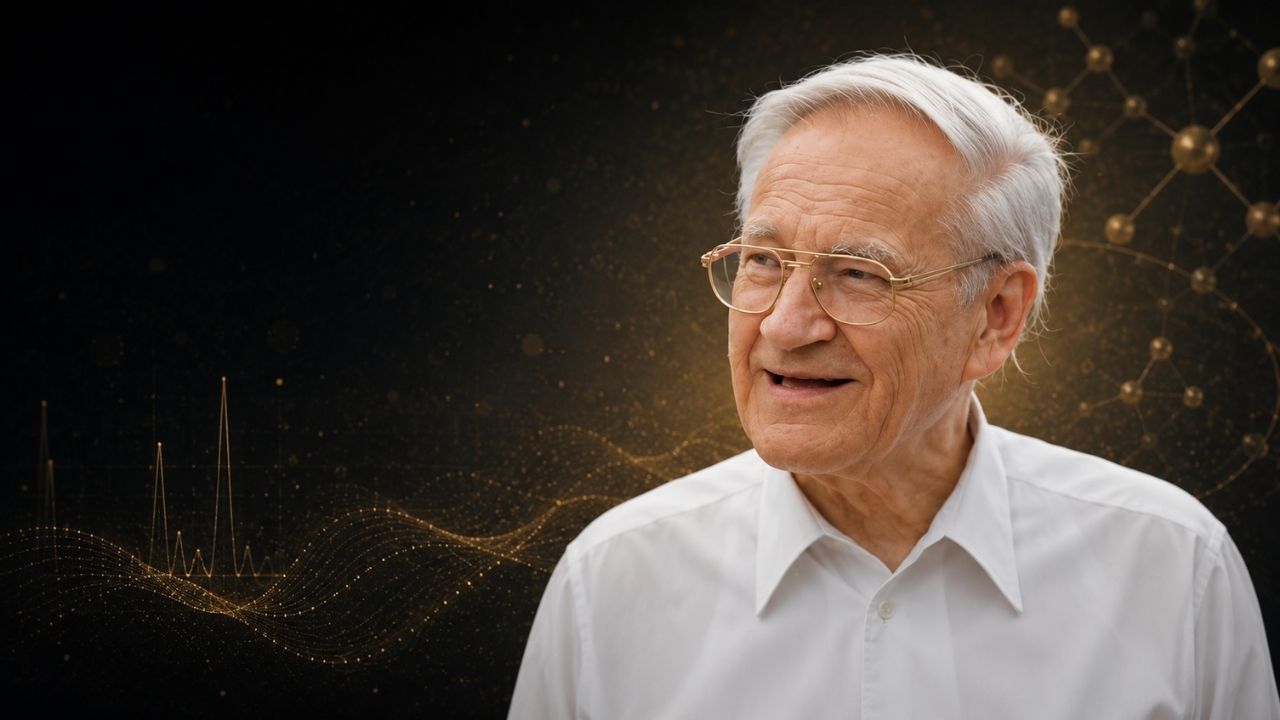
Synopsis
Richard R. Ernst transformed nuclear magnetic resonance from a slow specialist technique into one of the most powerful tools in science. Born in Winterthur in 1933, he studied chemistry at ETH Zurich and earned his doctorate in 1962. At Varian Associates he developed Fourier-transform NMR and advanced pulse techniques, then returned to ETH in 1968 and pioneered two-dimensional spectroscopy. This documentary follows the breakthroughs that revolutionized molecular structure analysis and earned the 1991 Nobel Prize in.
Why This Matters
Modern chemistry, structural biology, drug discovery and medical magnetic-resonance imaging all depend on methods that grew from Ernst's work. Fourier-transform NMR increased sensitivity and speed, while two-dimensional techniques allowed scientists to untangle complex molecular interactions and determine biomolecular structures. His career shows how sophisticated mathematics and carefully designed experiments can turn faint magnetic signals into detailed chemical knowledge. This documentary explains the technology.
Life & Journey
Born in Winterthur
ETH Chemistry Diploma
ETH Doctorate
Joined Varian
Fourier NMR Developed
Returned to ETH
Full Professor
Benoist Prize
Nobel Prize
Retired from ETH