The Physicist Who Rewrote the Rules of Quantum Matter
From Stalin's prison to the Nobel Prize, Lev Landau built theories that transformed our understanding of matter.
Lev Landau ranged across theoretical physics with a breadth few scientists have matched. A prodigy from Baku, he studied with Niels Bohr, built an influential physics school in Kharkov and survived imprisonment during Stalin’s…
▶ Watch Documentary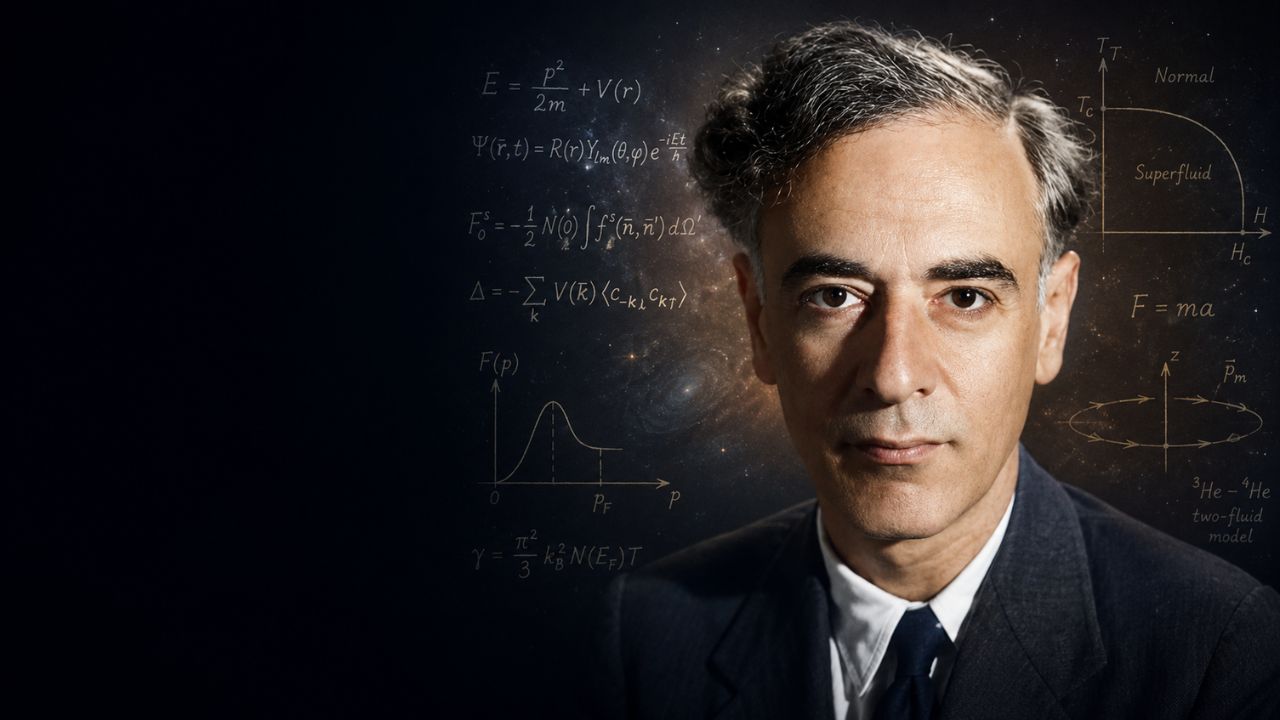
Synopsis
Lev Landau ranged across theoretical physics with a breadth few scientists have matched. A prodigy from Baku, he studied with Niels Bohr, built an influential physics school in Kharkov and survived imprisonment during Stalin’s purges. His 1941 quantum theory of superfluid helium explained the strange behavior of helium II and ultimately brought him the 1962 Nobel Prize. Along the way he transformed magnetism, phase transitions, superconductivity, plasma physics and Fermi-liquid theory before a devastating car crash.
Why This Matters
Landau's story combines extraordinary scientific range with one of the most dramatic lives in twentieth-century physics. His ideas explain phenomena from electrons in magnetic fields to superfluid helium, superconductors and quantum liquids, while his Theoretical Minimum created a legendary school of physicists. He also survived Stalinist imprisonment and, decades later, a catastrophic accident that mobilized scientists across borders. Understanding Landau means seeing how one physicist helped shape the language of.
Life & Journey
Born in Baku
Graduates Leningrad
Landau Diamagnetism
Leads Kharkov Theory
Moves to Moscow
Arrested in Purge
Kapitsa Secures Release
Superfluidity Theory
Crash and Nobel Prize
Dies in Moscow
More from MigOroEdu
Hot Water Can Freeze First. The Reason Is Stranger Than You Think
MigOroEdu · 15 min
The Universe That Computed Space — But Forgot Gravity
MigOroEdu · 15 min
The Black Hole Paradox That Threatens Quantum Mechanics
MigOroEdu · 15 min
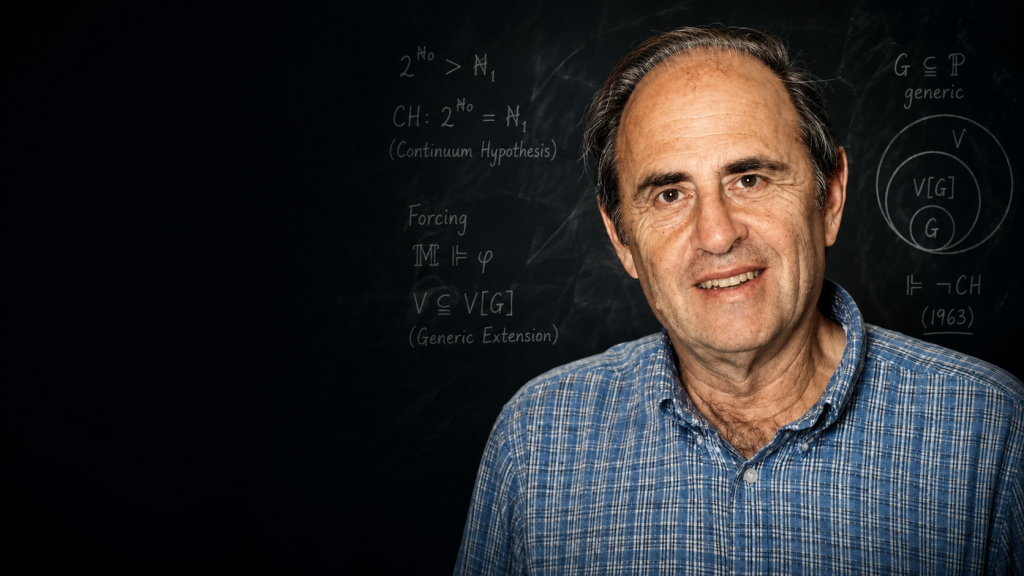
Paul Cohen
MigOroEdu · 15 min