The Mathematician Who Rewrote Mechanics
How Joseph-Louis Lagrange transformed motion into a system of pure mathematical analysis.
Joseph-Louis Lagrange became one of the greatest architects of mathematical physics by unifying mechanics through analysis. A teenage prodigy in Turin, he developed the calculus of variations, advanced number theory and celestial mechanics, and…
▶ Watch Documentary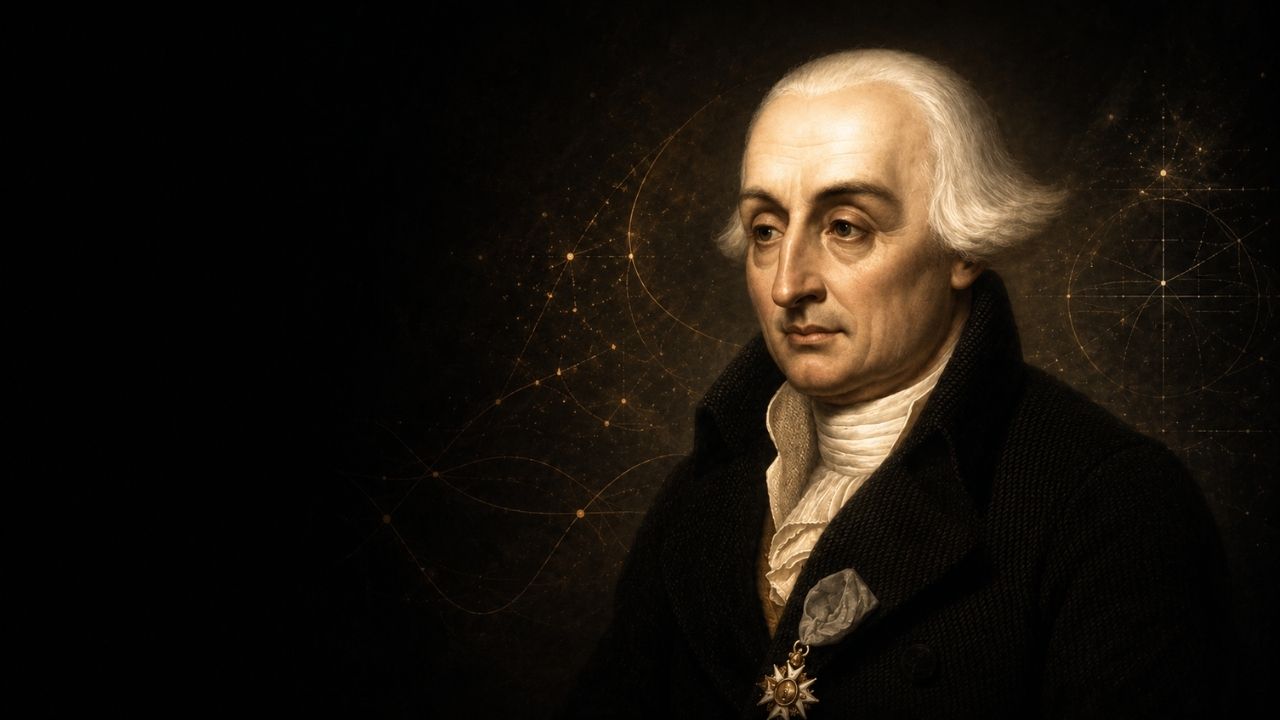
Synopsis
Joseph-Louis Lagrange became one of the greatest architects of mathematical physics by unifying mechanics through analysis. A teenage prodigy in Turin, he developed the calculus of variations, advanced number theory and celestial mechanics, and later succeeded Euler in Berlin. His 1788 masterpiece, Mécanique analytique, recast motion without relying on geometric diagrams. This documentary follows Lagrange from Turin to Paris, showing how his equations became foundations for classical mechanics, astronomy and modern.
Why This Matters
Lagrange's equations still sit at the heart of mechanics, robotics, aerospace engineering, relativity and quantum field theory. His approach showed that complicated motion could be derived from a small number of general principles, changing how scientists formulate physical law. His career also connects the academies of Turin, Berlin and revolutionary Paris. Understanding Lagrange reveals how mathematical abstraction became a practical engine for predicting planets, designing machines and describing the dynamics of.
Life & Journey
Born in Turin
Turin Professor
Variation Method
Turin Society Founded
Berlin Academy Director
Three-Body Prize
Moved to Paris
Mécanique Analytique
École Polytechnique Professor
Death in Paris
More from MigOroEdu

The Shape That Can Fill Space — Without Ever Repeating It
MigOroEdu · 15 min
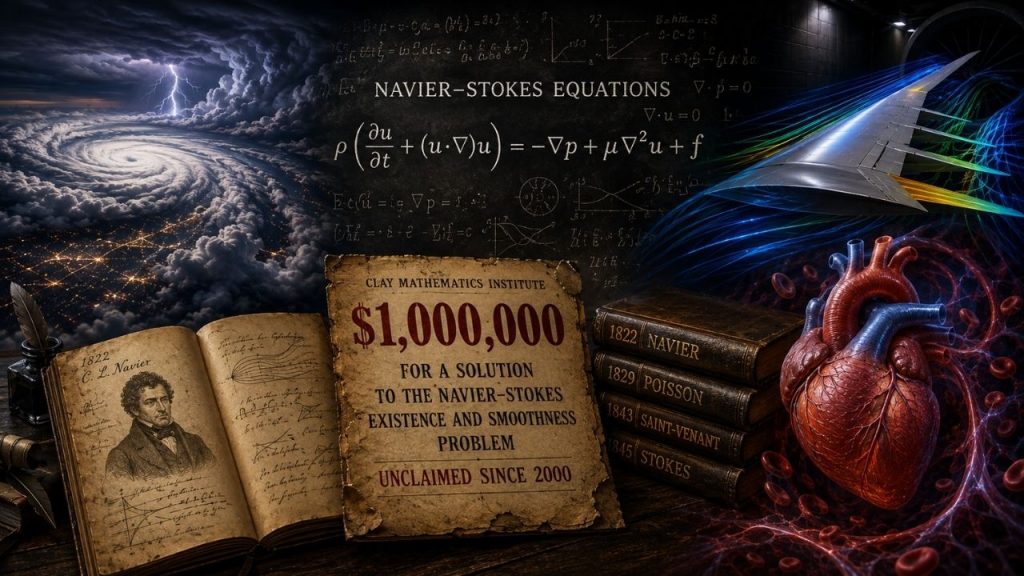
The 200-Year-Old Equation We Still Can’t Prove Is Safe
MigOroEdu · 15 min
Luis Caffarelli
MigOroEdu · 15 min
Paul Cohen
MigOroEdu · 15 min