The Mathematician Who Proved Randomness Can Be Rigid
How Elon Lindenstrauss used ergodic theory to solve deep problems in number theory.
Elon Lindenstrauss became a leading mathematician by proving that certain dynamical systems are far more rigid than they appear. Born in Jerusalem in 1970, he earned bachelor’s, master’s and doctoral degrees at the Hebrew…
▶ Watch Documentary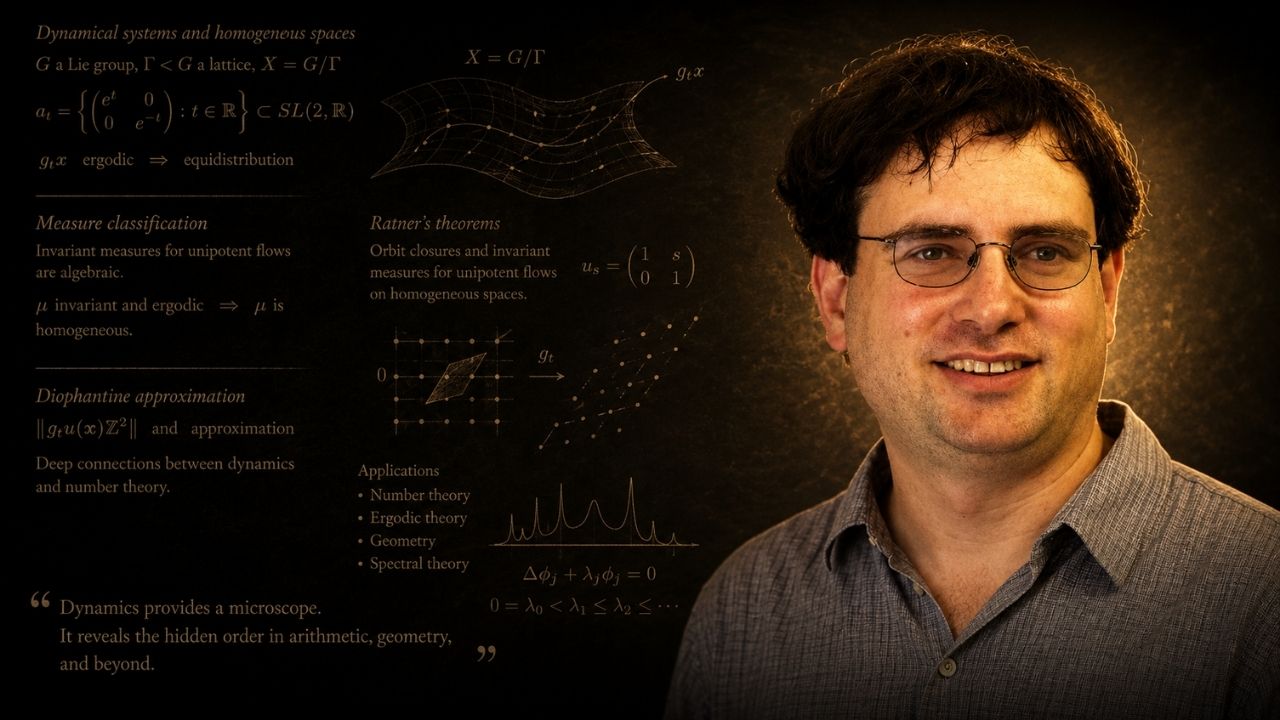
Synopsis
Elon Lindenstrauss became a leading mathematician by proving that certain dynamical systems are far more rigid than they appear. Born in Jerusalem in 1970, he earned bachelor’s, master’s and doctoral degrees at the Hebrew University before postdoctoral work at the Institute for Advanced Study and Stanford. He joined Princeton in 2004, Hebrew University in 2009 and the IAS faculty in 2024. This documentary follows his measure-rigidity breakthroughs and their applications to number theory. an endu
Why This Matters
Ergodic theory studies how systems evolve over long periods, but Lindenstrauss showed that invariant measures in important arithmetic settings can be forced into remarkably rigid forms. Those results resolved major cases of quantum unique ergodicity and produced progress on Littlewood's conjecture. His work demonstrates how dynamics can unlock problems about numbers and quantum systems. This documentary makes measure rigidity accessible through a story of hidden order inside apparent randomness.
Life & Journey
Born in Jerusalem
IMO Bronze Medal
Hebrew University Degree
Master's Degree
Doctorate Completed
Blumenthal Award
Joined Princeton
Joined Hebrew University
Fields Medal
Joined IAS Faculty
More from MigOroEdu
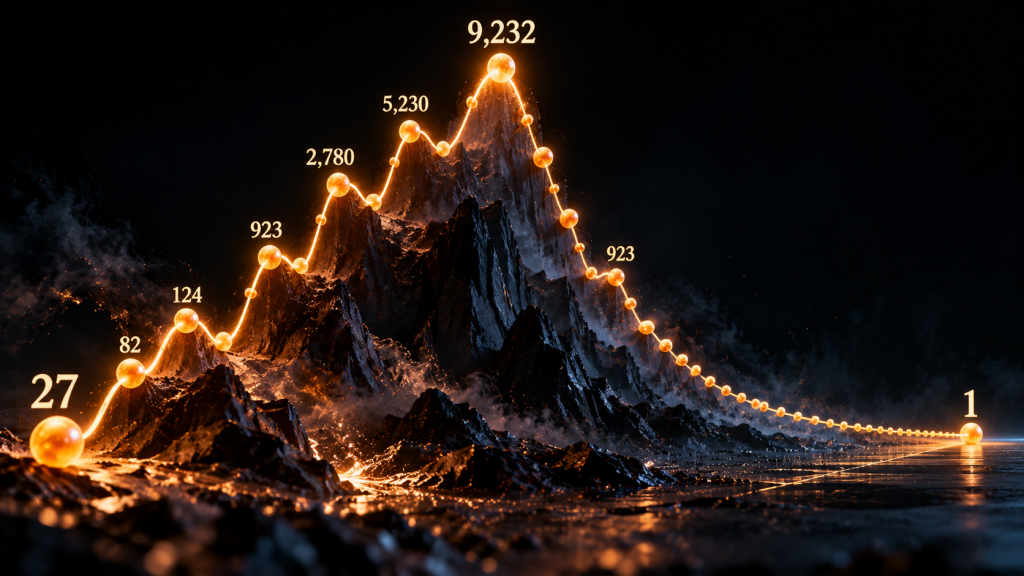
A Problem So Simple a Child Can Understand It — And Nobody Can Solve It
MigOroEdu · 15 min

The Pattern That Was True a Trillion Times — And Still False
MigOroEdu · 15 min
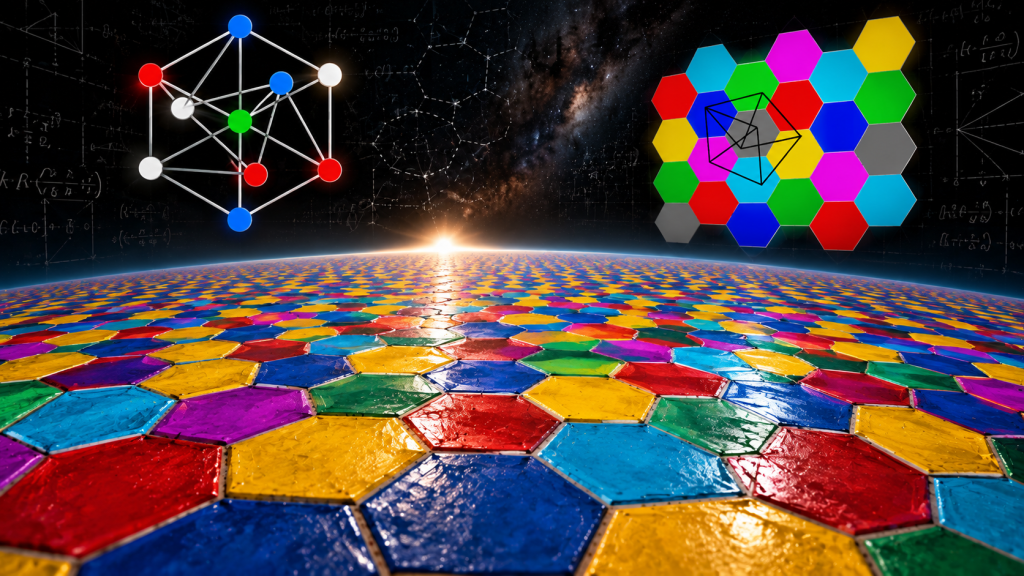

The Shape That Can Fill Space — Without Ever Repeating It
MigOroEdu · 15 min