The Physicist Who Gave Machines a Memory
How John Hopfield turned ideas from physics into a neural network that helped launch modern AI.
John Hopfield brought the language of statistical physics into neuroscience and artificial intelligence. In 1982 he introduced a recurrent neural network that stores patterns as stable energy states, allowing incomplete or corrupted information to…
▶ Watch Documentary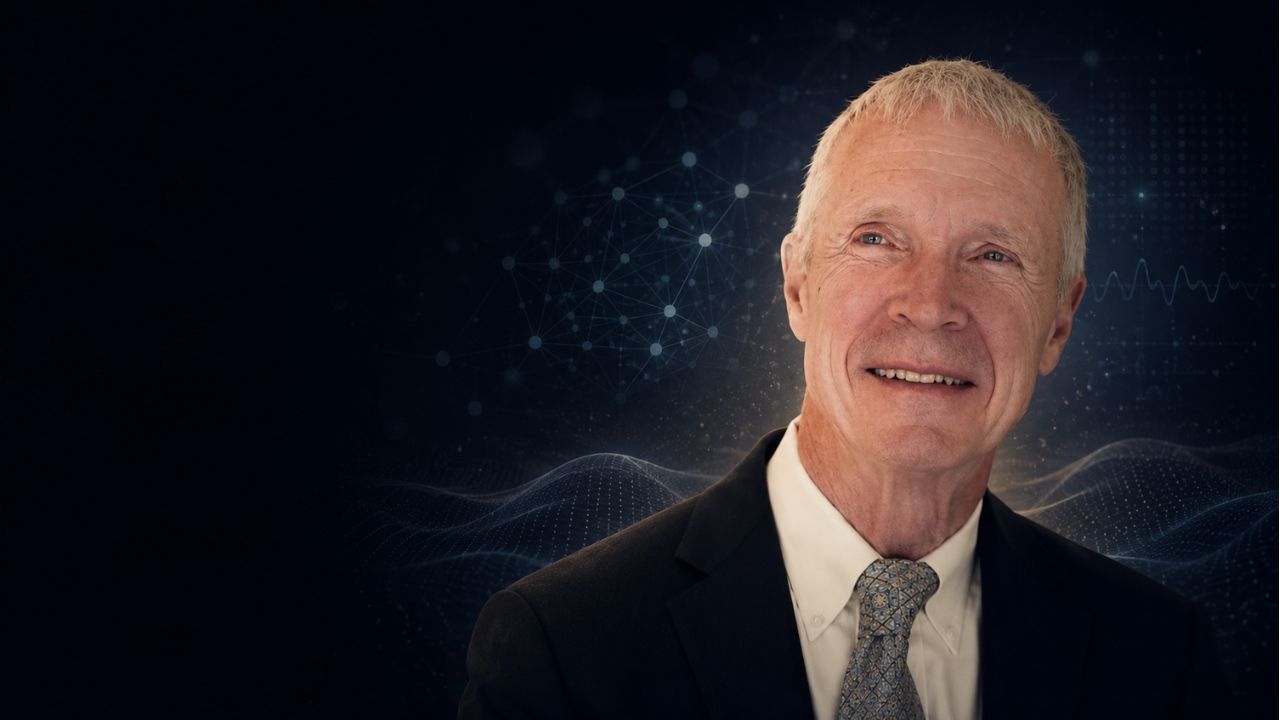
Synopsis
John Hopfield brought the language of statistical physics into neuroscience and artificial intelligence. In 1982 he introduced a recurrent neural network that stores patterns as stable energy states, allowing incomplete or corrupted information to recover a remembered pattern. The Hopfield network became a foundational model of associative memory and influenced later machine-learning systems. This documentary follows his interdisciplinary career across Bell Labs, Princeton and Caltech, culminating in the 2024 Nobel.
Why This Matters
Hopfield's network demonstrated that collective behavior in a physical system could perform a form of memory and computation. That insight helped connect neuroscience, statistical mechanics and machine learning, influencing the development of modern neural networks and energy-based models. His career also shows the creative power of crossing disciplinary boundaries rather than remaining inside one field. This documentary explains the physics behind associative memory and why the Nobel committee recognized it as a.
Life & Journey
Born in Chicago
Swarthmore Degree
Cornell Doctorate
Joined Bell Labs
Princeton Professor
Joined Caltech
Hopfield Network
Returned to Princeton
Dirac Medal
Nobel Prize
More from MigOroEdu
Luis Caffarelli
MigOroEdu · 15 min
Alain Aspect
MigOroEdu · 15 min
László Lovász
MigOroEdu · 15 min
Osamu Shimomura
MigOroEdu · 15 min